
Sanford Storm Damage
Homeowners face severe and prolonged water intrusion into residential properties from rising lake levels and street flooding during major tropical storms. Our certified crews respond immediately with industrial pumping and stabilization gear to secure your home.
Dedicated Storm Recovery And Structural Drying
Across our service area, Census ACS 5-year data indicates the median owner-occupied home was built in 1990 among 25,495 housing units on record.
About 35% of housing units locally (9,025 of 25,495) were built since 2000, so a substantial share of the local stock is still on its original systems.
Comparing the two halves of 2021-2025 across the municipality, radar hail signatures went from 1,105 to 1,433, marking a rise of 30% that stresses aging roof envelopes.
When severe weather strikes, property owners rely on our crew to schedule our primary emergency water extraction response before standing moisture causes permanent structural ruin.
A frequent reality during severe weather is that the regional extensive tree canopy sheds heavy debris during storms, clogging storm drains and causing rapid floodwater backups into low-lying structures.
Our Proven Storm Mitigation Protocol
Our systematic restoration protocol restores structural stability quickly, helping property owners coordinate full-scale structural flood cleanup after destructive weather strikes.
- Damage Assessment And Roof Stabilization. We immediately inspect the building envelope, addressing situations where storm-driven roof leaks cause water to pool on upper ceiling drywall, raising concerns about structural sagging and sudden ceiling collapse.
- Rapid Extraction And Carpet Removal. Heavy rainfall causes sump pump failures that leave inches of standing water in lower living spaces, requiring commercial extraction and rapid carpet removal to prevent total floor loss.
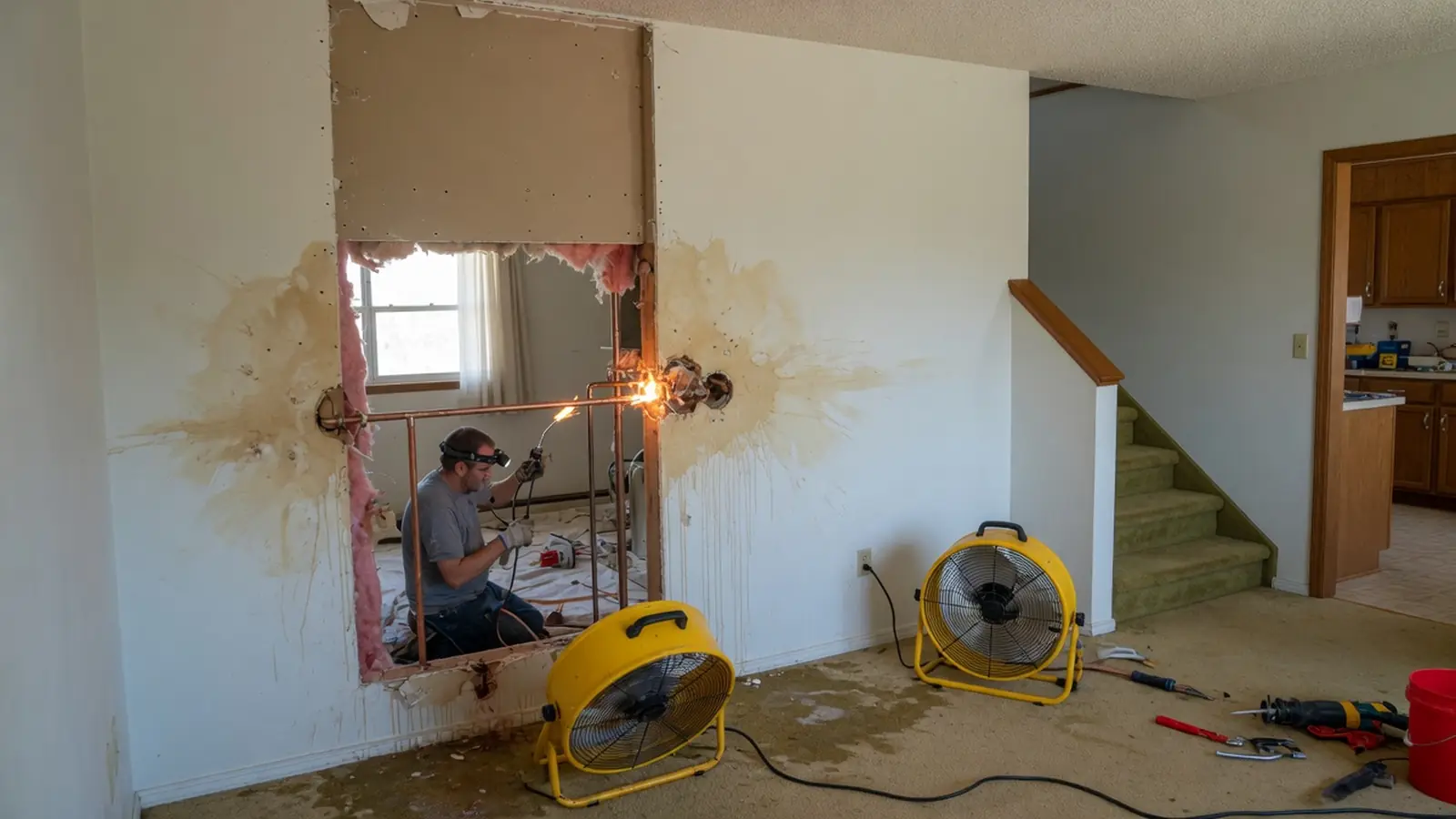
- Drywall Demolition And Antimicrobial Wash. Residents need urgent guidance on ripping out saturated drywall and soaked carpets to dry structural framing before mold colonization begins, which our technicians execute using precision containment.
- Industrial Dehumidification And Claim Verification. Our technicians verify deep structural dryness because daily moisture readings, thermal imaging, and proof of IICRC protocol adherence are essential evidence required for insurance claim approvals.
Rigorous Standards And Verified Drying
We adhere to rigorous industrial drying standards on every restoration project. If auxiliary incidents occur or washing machine line failures flood living areas, leaving homeowners unsure how to detect trapped moisture under subfloors and whether baseboards must come off, our crews deploy calibrated sensors to locate every pocket of dampness. You can also deploy certified mold remediation protocols through our team to protect indoor air quality under our comprehensive workmanship commitment.
Emergency Flood Extraction
Rapid removal of standing floodwaters utilizing truck-mounted pumps and submersible units. We halt water migration immediately to safeguard subflooring and foundational framing.
Structural Cavity Dehumidification
Industrial desiccant dehumidifiers and high-velocity air movers draw moisture out of wall assemblies and concrete slabs. Continuous moisture mapping confirms complete structural drying.
Storm Debris And Controlled Tear-Out
Hail activity locally is uneven year to year, as 2025 logged 1,048 radar signatures while 2021 logged only 322, a 3.3x spread that leads to sudden water penetrations. Our crews remove compromised sheetrock, insulation, and storm debris safely.
Our Verified Local Service Commitment
Our approach centers on rapid dispatch, meticulous insurance documentation, and relentless moisture monitoring to protect residential properties from catastrophic long-term water damage.
- 14Zip Codes Served
- 8Service Areas
- 3Services Offered
Read honest feedback from property owners who relied on our crew to stabilize and dry their homes following destructive severe weather.
“When gale winds pushed rainwater into our upper hallway late on a Sunday night, the crew answered my call immediately and had an extraction team at our door in under an hour. They placed emergency air movers right away and prevented our ceiling from dropping. Their prompt weekend communication gave us immense peace of mind.”
Marcus T.
“During the drywall removal, I was genuinely impressed by how clean and precise their cuts were along the four-foot flood cut line. The crew sealed every joint in the plastic containment barrier perfectly, leaving our living quarters completely dust-free while the subflooring dried. That attention to straight lines and tidy workspaces made rebuilding simple.”
Elena R.
“After seeing how thoroughly this company dried out our flooded ground floor, I told my next-door neighbor to call them immediately when her patio door leaked during the same storm. She hired them that afternoon and had the exact same positive experience. I will continue recommending them to anyone on our block facing storm recovery.”
Devon K.
“While removing the baseboards along our back wall, the technicians uncovered hidden moisture that had leaked behind our custom cabinetry from a compromised flashing joint. Instead of panicking or stalling the job, they explained the drying options clearly, set up targeted injection drying tubes, and dried the wall cavity without damaging my cabinets. They handled the entire surprise calmly and professionally.”
Brianna M.
Frequently Asked Questions
How quickly should storm water extraction begin after an intrusion?
Water extraction should commence within 24 to 48 hours to prevent microbial growth, structural wood rot, and irreversible subfloor delamination. Standing floodwater continually penetrates structural framing and subfloors, accelerating hidden property destruction if not removed immediately.
Does homeowner insurance cover tropical storm and hurricane water damage?
Standard home policies cover sudden wind-driven rain intrusions, while rising surface floodwaters mandate separate National Flood Insurance coverage. Our technicians document all damage using thermal imaging, psychrometric readings, and detailed line-item reporting to expedite claim approvals.
Why must drywall and insulation be removed rather than just dried in place?
Porous drywall and fiberglass insulation trap contaminated storm water internally, providing an ideal damp medium for rapid fungal amplification. Performing a precision flood cut above the water line removes wet cellulose and allows high-volume drying equipment to dry internal structural studs directly.
How do technicians confirm that framing inside closed walls is completely dry?
Restoration professionals use non-invasive moisture meters and infrared thermography to track moisture levels against dry baseline standards. We continuously log daily psychrometric readings until structural timber reaches equilibrium moisture content under IICRC S500 guidelines.
Can I run household fans to dry out flooded carpeting and subfloors myself?
Household box fans lack the static pressure to penetrate subflooring and merely circulate damp air, increasing airborne fungal risks. Commercial water restoration demands industrial centrifugal air movers paired with low-grain refrigerant dehumidifiers to extract vapor from deep building materials.